

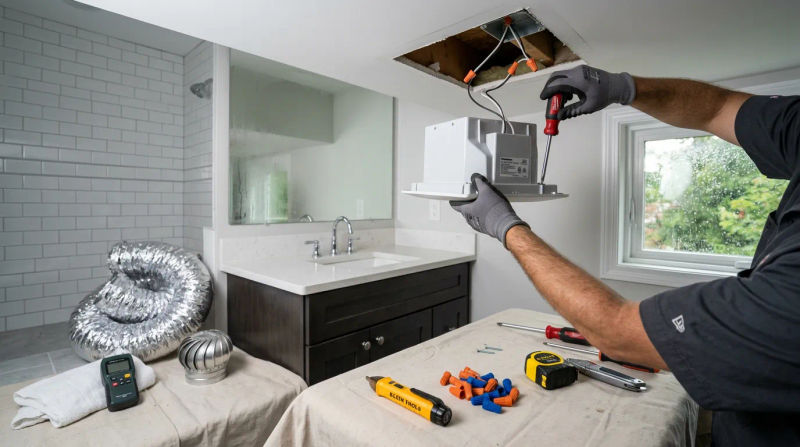
As a Senior Facilities Maintenance Supervisor with over a dozen years of hands-on experience in Charlotte, one of the first questions homeowners ask me is, "What's the realistic cost?" It's a fair question. You need to know what to expect before committing to a project. When it comes to a bathroom exhaust fan installation, the answer isn't a single number. The price depends heavily on your home's specific needs.
This guide will provide a transparent breakdown of the bathroom exhaust fan cost in the Charlotte area. Especially as we move through September, with its peak indoor humidity and lingering moisture from late-season storms, ensuring your home has proper ventilation is more critical than ever. A powerful, correctly installed fan is one of the best investments you can make for mold prevention bathroom ventilation upgrade before the cooler fall weather traps moisture inside.
Average Costs in Charlotte, NC
In Charlotte, the bathroom fan installation price Charlotte NC can range from a few hundred to over a thousand dollars. To give you a clearer picture, our technicians typically see projects fall into one of three categories. Please note these are ballpark figures for professional installation; the fan unit itself is usually purchased separately.
- Direct Replacement ($250 - $450): This is the most straightforward scenario. We remove an old, malfunctioning fan and install a new one of a similar size in the exact same location. This price assumes we can use the existing wiring and ductwork without any modifications. It's a simple swap-out.
- Replacement with Minor Modifications ($450 - $700): Often, a new, more powerful fan might be a different size than the old builder-grade model. This job involves cutting the ceiling drywall to enlarge the opening, potentially patching a small area, and ensuring the existing ductwork is properly connected to the new unit. It requires a bit more labor and materials than a direct replacement.
- New Installation with Ductwork ($750 - $1,500+): This is the most involved and variable project. It's required for bathrooms that have never had a fan or where the old fan was improperly vented into the attic (a major source of mold). This price includes cutting a hole in the ceiling, running new electrical wiring from a power source, and installing a complete duct system that terminates properly outside your home - either through a side wall or the roof. This is a true quiet bath exhaust fan install with duct run and is essential for effective moisture removal.
Factors That Affect Price
Understanding what drives the cost will help you see where your project fits. From my experience managing maintenance operations, these are the key variables our crews encounter daily.
1. Scope of Work: Replacement vs. New Install As outlined above, simply replacing an existing fan is far less expensive than installing one from scratch. A new installation is more labor-intensive, requiring electrical, ducting, and carpentry skills.
2. Ductwork Requirements This is a major cost factor. A bathroom fan is useless if it doesn't move moist air outside.
- No Existing Ductwork: If we have to install a new duct run, the cost will increase significantly. The path the duct needs to take - through an open attic, tight crawlspace, or between floors - determines the labor time.
- Building Era & Roof Complexity: Many homes in the Charlotte area, particularly the large 1990s-2000s houses in neighborhoods like Huntersville, have complex, steep rooflines. Venting through these intricate roofing systems is far more challenging and costly than venting through a simple gable end wall. Our technicians are trained to find the safest and most effective path for the duct run.
- Duct Repair/Replacement: Sometimes existing ductwork is undersized, disconnected, torn, or made of improper materials. To ensure your new fan works effectively, we may need to replace the old ducting, which adds to the cost.
3. Electrical Work Modern fans often have features that require updated wiring. If we are running a completely new circuit, adding a switch, or wiring for a fan that includes a light, heater, or humidity sensor, the electrical work will add to the final price.
4. Attic or Crawlspace Access Easy access to the space above the bathroom makes the job quicker and therefore less expensive. If the attic is cramped, filled with blown-in insulation, or has limited accessibility, our technicians will need more time to safely run ductwork and wiring.
5. The Fan Unit Itself You can buy a basic exhaust fan for under $50. However, a high-performance, quiet bath exhaust fan with features like a humidity sensor (which automatically turns the fan on when it detects moisture), an integrated LED light, a heater, or even a Bluetooth speaker can cost several hundred dollars. While the unit cost is separate, a more complex fan may require more intricate installation work.
6. Associated Repairs A professional quote should account for any necessary finishing work. This can include patching and texturing drywall around the new fan or vent exit, and priming or painting the repaired area.
How to Get the Best Value
Getting the best value isn't just about finding the lowest price - it's about getting a durable, effective solution that protects your home for years to come.
- Invest in Proper Venting: Never vent a bathroom fan into the attic. It might seem cheaper upfront, but it just moves the moisture problem from your bathroom to your attic, leading to potential mold growth, wood rot, and expensive remediation down the line. Paying for a proper duct run to the exterior is a non-negotiable investment in your home’s health.
- Choose the Right Size Fan: Fans are rated by CFM (Cubic Feet per Minute). A fan that's too small won't clear humidity effectively, and one that's oversized is inefficient. A professional can calculate the correct CFM rating for your bathroom's square footage.
- Bundle Projects: If you have more than one bathroom that needs an upgrade, having the work done at the same time can often save on labor costs, as the crew is already on-site with all the necessary tools and materials.
- Hire a Reputable Company: A professional handyman service or contractor has organized workflows and trained crews. Our technicians have standardized processes for everything from laying down protective coverings to performing the final testing. This efficiency and expertise prevent costly mistakes and ensure the job is done right the first time.
Questions to Ask Your Contractor
Before you hire anyone, make sure you're asking the right questions. This empowers you to compare quotes accurately and hire with confidence.
- Does your estimate include the cost of the fan unit, or just labor and materials?
- Will you be installing new, insulated ductwork, and where will it terminate outside?
- Is all finishing work, including drywall patching and texturing, included in the price?
- Are your technicians licensed and insured for this type of work?
- What kind of warranty do you offer on your workmanship?
- How do you handle unexpected issues, like discovering mold or rot once the old fan is removed?
An effective bathroom exhaust fan is more than a convenience; it's a critical component of your home's ventilation system, especially in Charlotte’s hot and humid climate. It protects your drywall, paint, and cabinetry from moisture damage and is your first line of defense against mold.
From my experience overseeing countless maintenance projects, a well-planned and professionally executed installation provides peace of mind and protects your investment. For a personalized estimate in Charlotte, contact QuaisMAINTENCECOMPANY for a free consultation. Our team can assess your specific needs and provide a clear, detailed quote.